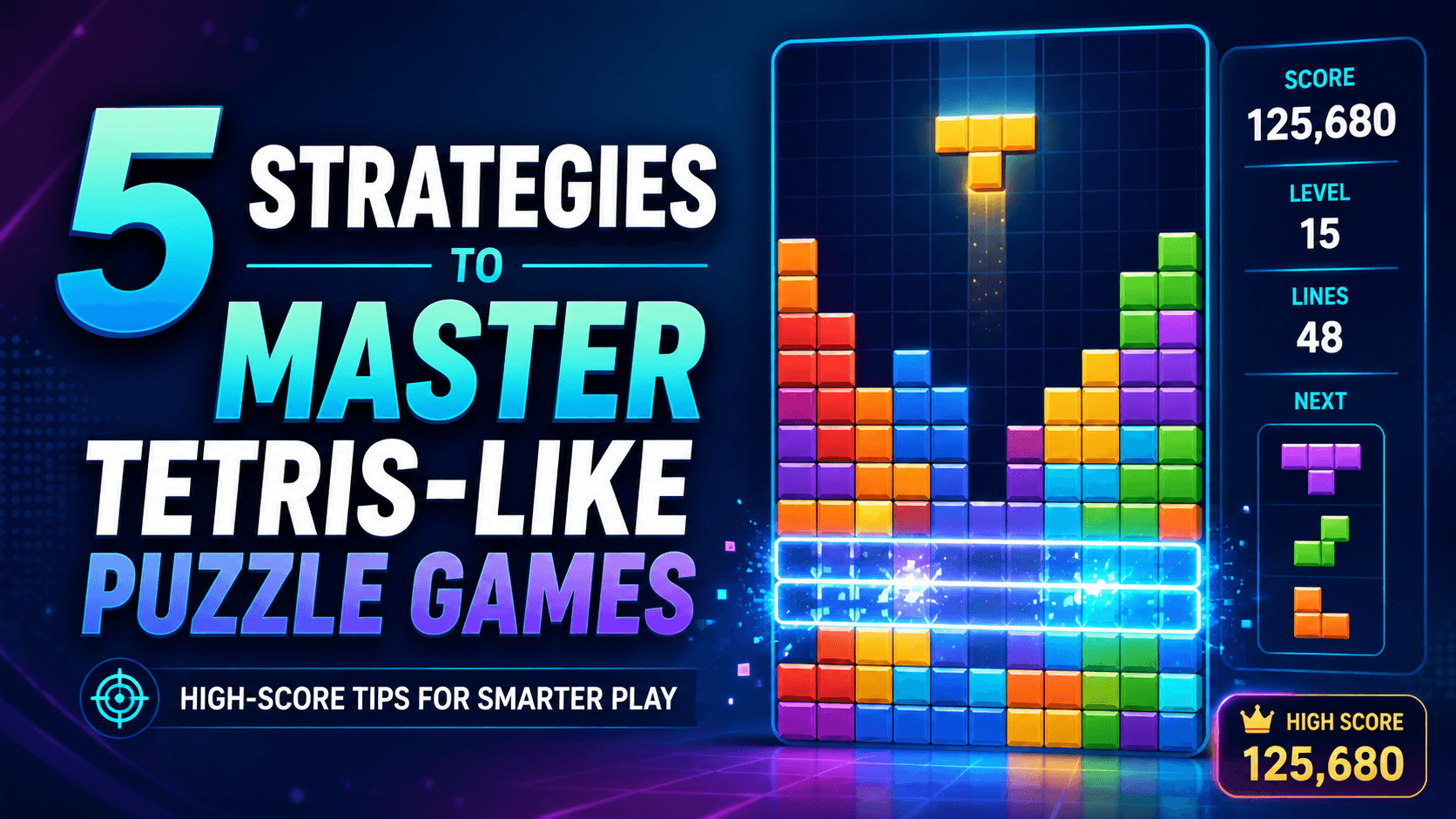
Tetris like puzzle games look simple at first, but getting a high score takes planning, patience, and smart moves. Whether you are playing a classic falling block game, a mobile block puzzle, or a modern puzzle board game, the goal is almost always the same: place blocks wisely, clear lines, and survive as long as possible.
Many players lose because they focus only on the current piece. Skilled players think ahead. They manage space, prepare for future blocks, and avoid risky gaps. The good news is that anyone can improve with the right Tetris strategies and block puzzle tips.
In this guide, you will learn five practical strategies to master Tetris like puzzle games and score higher with more confidence.
1. Keep Your Board Clean
Keeping your board clean means placing blocks in a way that avoids messy gaps and uneven stacks. A clean board gives you more options and makes it easier to survive longer.
The biggest mistake beginners make is dropping blocks wherever they fit. This may work for a few moves, but soon the board becomes crowded. Once the stack gets too high, every move becomes harder. A clean board helps you stay in control.
Try to keep the surface of your blocks as flat as possible. Small height differences are okay, but sharp towers and deep holes can create problems. When the board is uneven, simple pieces become difficult to place. You may be forced to put blocks in bad positions, which creates even more trouble.
One of the best block puzzle tips is to avoid single empty spaces that cannot be filled easily. These spaces are often called gaps. A gap under another block is even worse because you cannot clear it until the blocks above it are removed. This is why careless placement can quickly ruin a game.
Before placing a piece, ask yourself one simple question: will this move make the board easier or harder to manage? A good move should either clear space, prepare for a clear, or keep the stack balanced.
A clean board also helps you handle unexpected pieces. In many Tetris like puzzle games, you do not always get the shape you want. If your board is neat, you can place almost any piece safely. If your board is messy, even a useful block can become a problem.
High score players are not always faster. They are cleaner. They make fewer mistakes and give themselves more chances to recover.
2. Think One Step Ahead
Thinking one step ahead means planning for the next block instead of only reacting to the current one. This simple habit can improve your score very quickly.
Most puzzle games show the next piece or give you multiple blocks at once. Use that information. Do not ignore it. If you know what is coming next, you can place the current block in a smarter position.
For example, if the next piece is a long straight block, you may want to leave a long space ready for it. If the next piece is a square, you should avoid creating an odd narrow gap. If the next piece is awkward, you may need to place your current block in a way that gives it room.
This is one of the most important Tetris strategies because it turns the game from luck into planning. You cannot control which blocks appear, but you can control how prepared you are.
In mobile block puzzle games, players often receive three pieces at the same time. In that case, look at all three before placing any of them. Do not place the easiest piece first without thinking. Sometimes the hardest piece should be placed first because it needs more space.
A smart order can save your board. Place large or difficult blocks before small flexible ones. Small blocks are easier to fit later, while large blocks need open areas.
Thinking ahead also helps you avoid panic. When the board starts filling up, many players rush. They make quick moves and create more problems. But if you train yourself to pause for a moment, you will see better options.
You do not need to plan ten moves ahead. Start with one move. Look at the current piece, look at the next piece, and choose the move that helps both.
3. Build for Line Clears
Building for line clears means placing blocks with the goal of removing rows or columns, not just filling empty space. This is how you create room and increase your score.
In most Tetris like puzzle games, clearing lines is the key to survival. Every line clear gives you more space. More space means more time. More time means more points.
A common beginner mistake is filling the board without creating clears. The board may look full and stable for a while, but if no lines are being removed, you are slowly running out of space.
Try to create setups where one piece can clear multiple lines. In classic Tetris, players often leave one vertical space open for the long block. This allows them to clear four lines at once. In block puzzle games, you can prepare rows and columns together so one move clears several areas.
However, do not become too greedy. Waiting too long for the perfect piece can be dangerous. If your stack is rising too high, clear smaller lines and stay safe. A high score comes from balance, not risky moves every time.
When building for line clears, pay attention to both short term and long term value. A move that clears one line now may be better than a move that creates a possible big clear later but makes the board messy.
Good players know when to attack and when to defend. Attack means setting up big clears. Defend means clearing space to stay alive. Both are important.
One useful tip is to keep your clear zones open. If you are building a line clear on the right side, do not block that area with random pieces. Keep the shape ready. Treat it like a small plan.
Line clears also help your rhythm. Once you start clearing regularly, the game feels smoother. You are no longer just reacting. You are controlling the board.
4. Avoid Tall Towers
Avoiding tall towers means keeping your stack low and balanced instead of building one side too high. Tall towers reduce your options and make the game risky.
A tower can happen when you keep placing blocks on one side because they fit there. At first, it may not seem like a problem. But soon that side becomes too high, and you have less room to work with.
In falling block games, a tall tower can end the game quickly. If pieces reach the top, you lose. In board based block puzzle games, tall sections can block useful placements and waste space.
The best strategy is to spread blocks evenly across the board. Try not to let one area become much higher than the rest. A balanced board gives you more freedom.
This does not mean your board must be perfectly flat. Some unevenness is normal. The goal is to avoid extreme height differences. A small slope is manageable. A giant wall is dangerous.
Tall towers also make certain pieces harder to place. Long pieces, square pieces, and wide pieces need room. If your board has one high side and one low side, you may be forced into bad placements.
If you notice a tower forming, fix it early. Do not wait until it becomes urgent. Use pieces to level the surface. Clear lines near the tower if possible. Even if the move does not score big, it can save the game.
In many block puzzle games, staying low is more important than scoring quickly. A low board gives you breathing room. It lets you survive bad pieces and recover from mistakes.
High scores usually come from long games. Long games come from good board control. Good board control starts with avoiding tall towers.
5. Stay Calm and Play With Rhythm
Staying calm means making careful choices even when the game becomes fast or crowded. Puzzle games reward clear thinking more than panic moves.
When the speed increases, many players lose control. They start dropping pieces quickly without checking the board. This creates gaps, towers, and blocked spaces. Once panic begins, the game can fall apart in seconds.
The best players build rhythm. They know when to move fast and when to slow down. They do not rush every placement. They make confident moves because they understand the board.
If you are playing a fast Tetris style game, practice movement controls until they feel natural. Learn how to rotate pieces quickly. Learn how to slide pieces into place. The less you think about controls, the more you can focus on strategy.
If you are playing a slower block puzzle game, use the time you have. There is no need to rush. Look at all available blocks. Check possible clears. Think about which move gives the most space.
One simple trick is to pause mentally before every important move. Even one second can help you see a better placement. Many bad moves happen because the player acts too quickly.
Staying calm also helps after mistakes. Everyone makes bad placements. The difference is how you respond. A beginner may panic and make more mistakes. A skilled player looks for recovery moves.
If you create a gap, do not give up. Build around it carefully. Try to clear the blocks above it. If your board gets high, focus on survival instead of big scores.
Puzzle games are about control. The more relaxed you are, the better your decisions become.
Extra Block Puzzle Tips for Better Scores
Small habits can make a big difference in Tetris like puzzle games. Once you understand the main strategies, these extra tips can help you improve even more.
Keep flexible spaces open. Do not fill every empty area immediately. Open space is valuable because it gives future blocks room.
Use small pieces wisely. Small pieces are great for fixing mistakes, filling gaps, and completing clears. Do not waste them if a larger piece needs space first.
Watch the corners. Corners can become traps if you place awkward blocks there. Make sure corner spaces remain usable.
Do not chase only big clears. Big clears are exciting, but safe clears are often better. A steady game usually beats a risky game.
Practice regularly. Like any skill based game, improvement comes with repetition. The more you play with purpose, the better your pattern recognition becomes.
Common Mistakes to Avoid
Many players struggle because they repeat the same mistakes without noticing them. Avoiding these mistakes can improve your score quickly.
The first mistake is creating covered gaps. Once a gap is trapped under other blocks, it becomes difficult to remove. Always check what empty spaces your move will create.
The second mistake is ignoring the next piece. The game often gives you useful information. Use it before making your move.
The third mistake is building too high too early. A high board creates pressure and leaves no room for recovery.
The fourth mistake is waiting too long for the perfect block. Sometimes you need to clear space now instead of hoping for a better move later.
The fifth mistake is playing too fast when speed is not required. In many mobile block puzzle games, there is no timer. Take your time and make the best move.
How to Practice Tetris Strategies
The best way to practice Tetris strategies is to focus on one skill at a time. Do not try to master everything in one game.
Start by practicing clean placement. Play a few games where your only goal is to avoid gaps. Do not worry too much about score. Just keep the board neat.
Next, practice planning ahead. Before every move, look at the next piece or all available blocks. Train yourself to think before placing.
Then practice line clear setups. Try to prepare rows and columns instead of placing blocks randomly. Learn how different shapes work together.
After that, practice recovery. When you make a mistake, do not restart immediately. Try to fix the board. Recovery skill is very important for high scores.
Finally, practice speed. Once your strategy improves, faster play will become easier. Speed without strategy leads to mistakes. Strategy with speed leads to high scores.
Final Thoughts
Mastering Tetris like puzzle games is not about luck. It is about clean placement, smart planning, line clears, board balance, and calm decisions. When you apply these five strategies, you give yourself more control over every game.
Start with the basics. Keep your board clean. Think one step ahead. Build for line clears. Avoid tall towers. Stay calm when the game gets harder.
Over time, these habits will become natural. You will start seeing better moves faster. Your board will stay open longer. Your scores will rise because you are no longer just reacting to the game. You are playing with strategy.
Whether you are a beginner or an experienced player, these Tetris strategies and block puzzle tips can help you improve your skills and enjoy the game more.
FAQs
What is the best strategy for Tetris like puzzle games?
The best strategy is to keep the board clean, avoid gaps, and plan for line clears. A clean and balanced board gives you more placement options and helps you survive longer.
How do I get a higher score in block puzzle games?
You can get a higher score by clearing lines regularly, placing difficult blocks first, keeping open space, and avoiding tall stacks. Long survival usually leads to better scores.
Should I always wait for a big line clear?
No, you should not always wait for a big line clear. Big clears are useful, but safe smaller clears are better when your board is getting crowded.
Why do I lose quickly in Tetris style games?
You may lose quickly because of covered gaps, uneven stacks, poor planning, or rushing moves. Focus on board control before trying to play faster.
Are Tetris strategies useful for mobile block puzzle games?
Yes, many Tetris strategies also work in mobile block puzzle games. Clean placement, planning ahead, and clearing space are useful in almost every block based puzzle game.